
Description
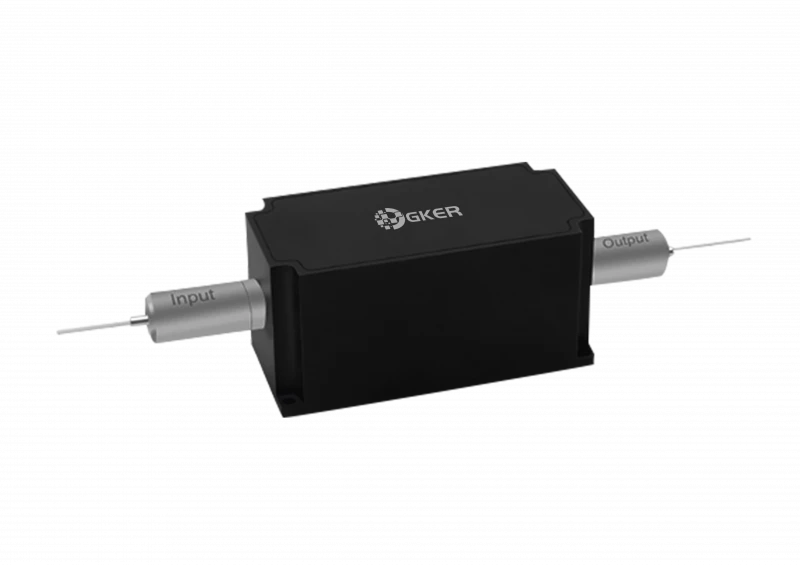
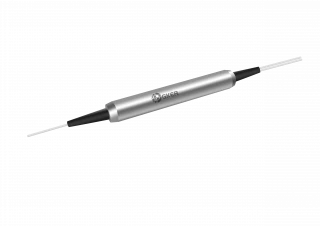
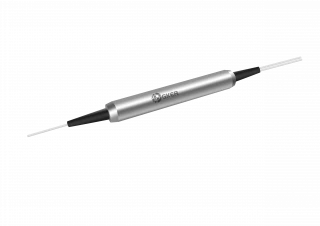
The 980 nm High Power Polarization Insensitive Isolator is a pinnacle of optical engineering, designed to excel in high-demand environments typical of fiber laser and precision instrumentation applications. This isolator stands out due to its exceptional low insertion loss and high isolation, which are critical for maintaining signal integrity and minimizing optical feedback in complex optical setups.
Engineered to handle up to 20 watts of average optical power, this device is equipped to manage high power with remarkable efficiency. Its high return loss and minimal polarization dependent loss ensure that the isolator delivers consistent performance, irrespective of the polarization states of the light passing through it. This feature is particularly important in applications where light polarization can vary, such as in diverse laser systems and multiplexed optical communications.
The isolator's robust construction guarantees not only high performance but also superior environmental stability and reliability. It can operate effectively across a temperature range from +10 to +50°C, making it suitable for use in a variety of settings, from controlled laboratory environments to more demanding industrial conditions.
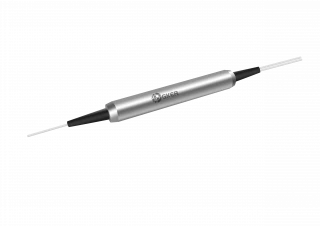
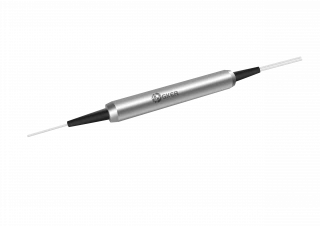
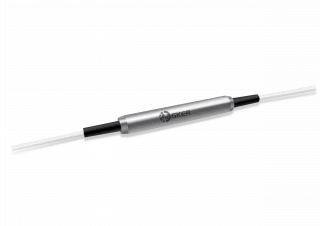
980nm | 20W High Power Polarization Insensitive Isolator (HI Series)
Specifications
| Type Of The Device: | Isolator |
|---|---|
| Operating Wavelength: | 980 nm |
| Max Power: | 20 W |
| Min Isolation: | 25 dB |
| Center Wavelength (λc): | 980 nm |
| Operating Wavelength Range: | λc ± 10 nm |
| Min. Isolation, λc, 23 ℃, All Polarization StatesTyp.: | 25 dB |
| Max. Average Optical Power: | 20 W |
| Max. Peak Power For Ns Pulse: | 10 kW |
 Download Data Sheet

Features
- Center Wavelength: 980 nm, within a ±10 nm operating range
- Typical Peak Isolation: 30 dB
- Minimum Isolation: 25 dB at center wavelength, accommodating all polarization states
- Typical and Maximum Insertion Loss: 0.8 dB and 1 dB respectively, ensuring efficient transmission
- Return Loss: Minimum 45/45 dB, optimizing system performance by reducing reflections
- Polarization Dependent Loss: Max 0.2 dB, highlighting its polarization insensitivity
- Maximum Average Optical Power: 20 W
- Maximum Peak Power for Nanosecond Pulses: 10 kW
- Maximum Tensile Load: 5 N
- Fiber Type: HI 1060 Fiber, tailored for high-performance applications
Customization Options:
- Fiber Length: Standard at 1.0 m, with customization available
- Handling Power: Options available for 3 W, 10 W, and 20 W, accommodating different application demands
- Fiber Jacket: Choices include 250 μm Bare Fiber and 900 μm Loose Tube, among others
- Connector Type: None standard with options available
- Power Type: Suitable for both Pulse and Continuous Wave applications
Applications
- Fiber Laser Systems: Essential for maintaining high-quality signal transmission in fiber lasers used in manufacturing, cutting, and engraving, where precise beam quality is crucial.
- Telecommunications: Improves the performance of optical communication systems by ensuring stable signal integrity and reducing feedback, which is vital for long-distance and high-bandwidth communications.
- Medical Instrumentation: Used in biomedical imaging and laser surgery systems where consistent and reliable laser output is necessary for accurate diagnostics and treatments.
- Optical Sensing: Enhances the accuracy of optical sensors used in environmental monitoring and industrial automation by stabilizing the laser signal against external disturbances.
- Research and Development: Provides a stable testing environment for experimental setups in photonics research, where controlled and reliable laser outputs are necessary for data integrity.
- Industrial Metrology: Critical in precision measurement tools that rely on lasers, ensuring that the devices operate with high precision and reliability under various environmental conditions.
Frequently Asked Questions
What is a 980 nm High Power Polarization Insensitive Isolator?
How does the 980 nm Isolator enhance fiber laser systems?
Why is the 980 nm Isolator important for telecommunications?
Can the 980 nm Isolator handle different power levels?
What are the key features of the 980 nm Isolator?
Where is the 980 nm High Power Isolator typically used?
What does high return loss mean for the 980 nm Isolator?
How does the isolator’s environmental stability benefit its applications?
Similar Products



Your inquiry has been received.
Create an account by adding a password
Why create an account?
- Auto-complete inquiry forms
- View and manage all your past messages
- Save products to your favorites
- Close your account anytime — no hassle